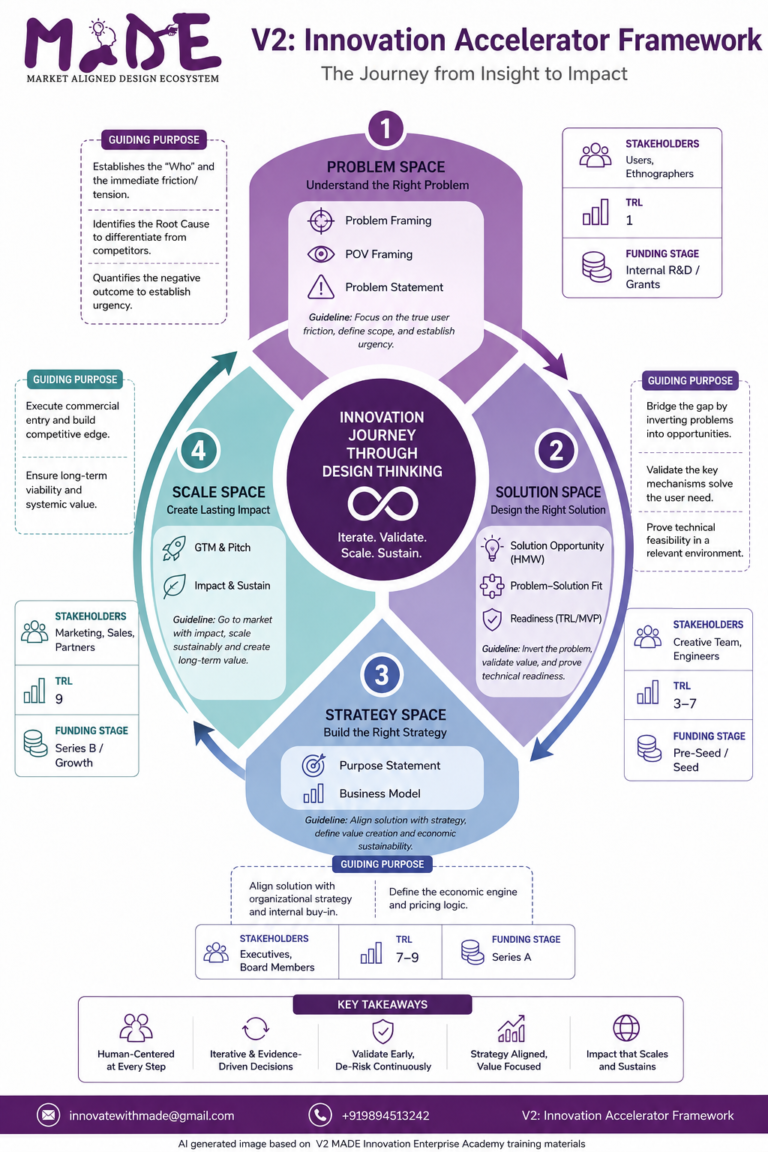
The purpose of design thinking is to help innovation to accelerate to the use for the society. Current curriculum and the center of excellence in IHL/Universities run in silo and hence there is a greater need to adopt a method to develop graduate that create IMPACT for the new market of the FUTURE. This framework introduces participants to the principles and practices of human-centered innovation. It integrates design thinking, problem exploration, rapid prototyping, business modeling, and technology readiness assessment to guide students from identifying real-world problems to delivering investor-ready solutions. Through experiential learning, students will work in teams to explore user needs, develop prototypes, validate assumptions, and pitch viable business models preparing students to drive innovation in startups, enterprises, and social ventures.
Needs for Accelerating Innovation
Our Approach
Aligned with Market Readiness Level
Embedding Design Thinking as Curriculum pathway to Innovation
Enabled pathway towards startup accelerations
Produce evidence for NAAC, NBA, and NIRF reporting
Enhances institutional differentiation and brand value
MADE Market, Innovation, Enterprise (MIE) Academy
Background
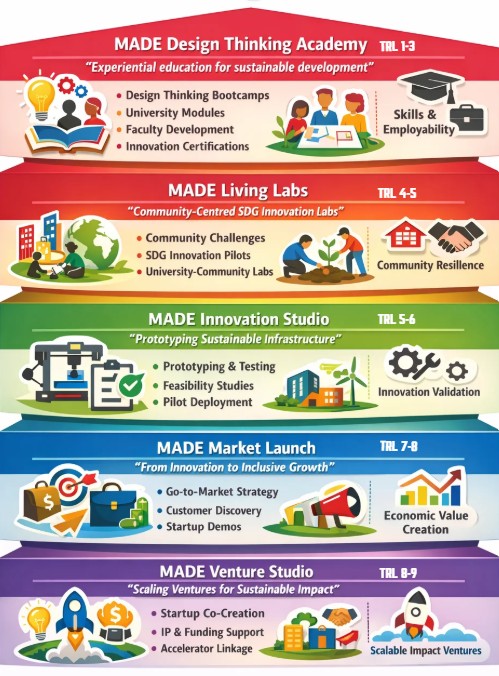
Universities and IHLs today face a common challenge: many excellent ideas, research outputs, and student innovations never progress beyond the classroom or laboratory. MADE MIE Academy aimed to address this gap by providing a structured pathway that moves ideas from conception to commercialisation through Readiness Level Index (RL). Our framework spans the entire innovation journey.
At TRL 1–3, the MADE Design Thinking Academy develops innovation mindsets, problem-solving capabilities, and entrepreneurial thinking among students, academics, and researchers.
At TRL 4–5, our MADE Living Labs connect universities with communities and industry partners to validate ideas against real-world challenges, particularly those aligned with sustainability and SDG priorities.
At TRL 5–6, the MADE Innovation Studio supports prototyping, testing, feasibility assessment, and pilot deployment, helping innovations move beyond research outputs into viable solutions.
At TRL 7–8, MADE Market Launch equips innovators with market validation, customer discovery, and go-to-market strategies to prepare technologies for adoption and commercial success.
Finally, at TRL 8–9, the MADE Venture Studio supports venture creation, investment readiness, accelerator linkage, and scalable impact enterprises.
Overarching Readiness Level
We provide a complete innovation ecosystem that helps universities strengthen graduate employability, enhance industry engagement, accelerate research commercialisation, and generate measurable societal and economic impact. We would welcome the opportunity to work alongside your institution to build a sustainable innovation pipeline—from students and researchers to market-ready technologies and impact-driven ventures.
Your Needs
“If your university/IHL could systematically move more student projects, research outputs, and innovations from the laboratory to real-world adoption, would that align with your current strategic priorities?”
Our Solution
“MADE provides universities with a complete Technology Readiness ecosystem that transforms ideas into impact. Through our TRL 1–9 framework, we help students, researchers, and institutions move from design thinking and innovation validation to prototyping, market launch, and venture creation. The outcome is stronger graduate employability, increased research commercialisation, deeper industry engagement, and measurable societal impact”
MADE MIE Academy Programmes
MADE V2: Innovation Accelerator Bootcamp: Using Design Thinking to Transform Ideas into Startups (5 days)
Module 1: Innovation through Design Thinking (CODE)
Design Thinking – A Primer
Alignment of Design Thinking for Constructive Curriculum Adoption
Module 2: Shift Innovation Strategies (TRL 1-4)
Accelerating Innovation with Purpose
Module 3: Market Driven Approaches (TRL 5-7)
Six Dimensions of Readiness Level Mapping
Eight Step Strategy for Movement of Lab to Market
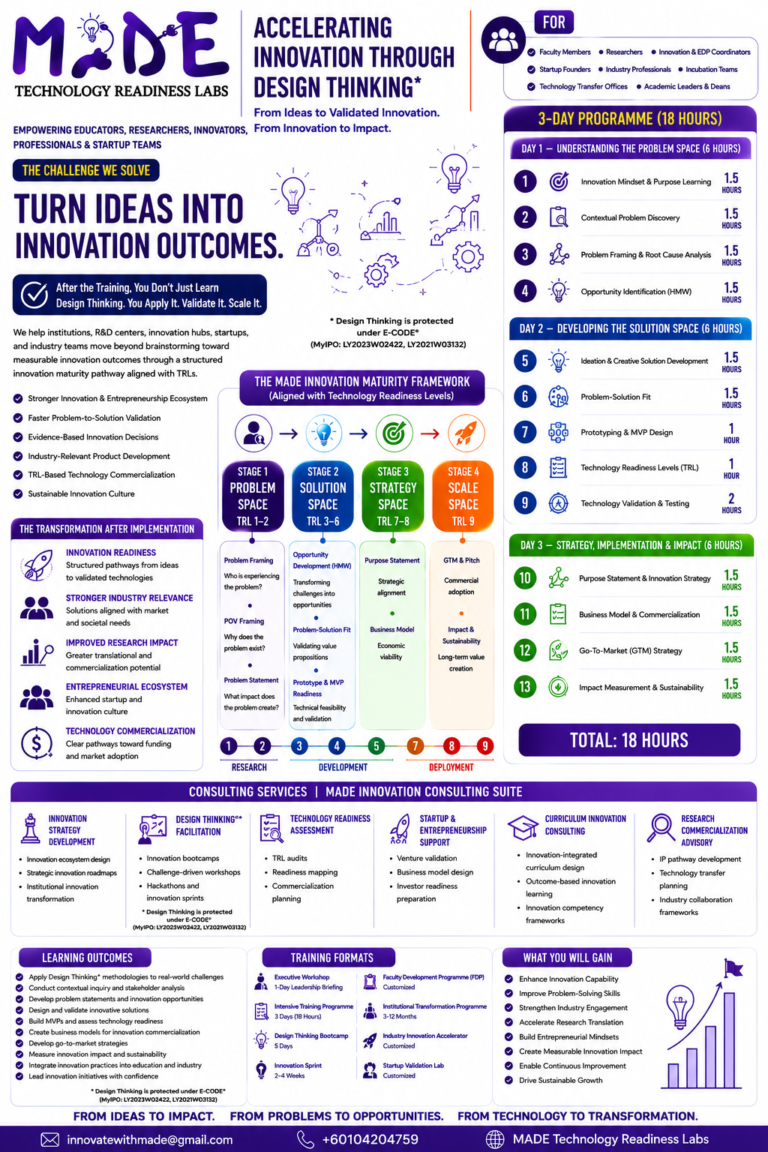
MADE 104 Accelerating Innovation through Design Thinking
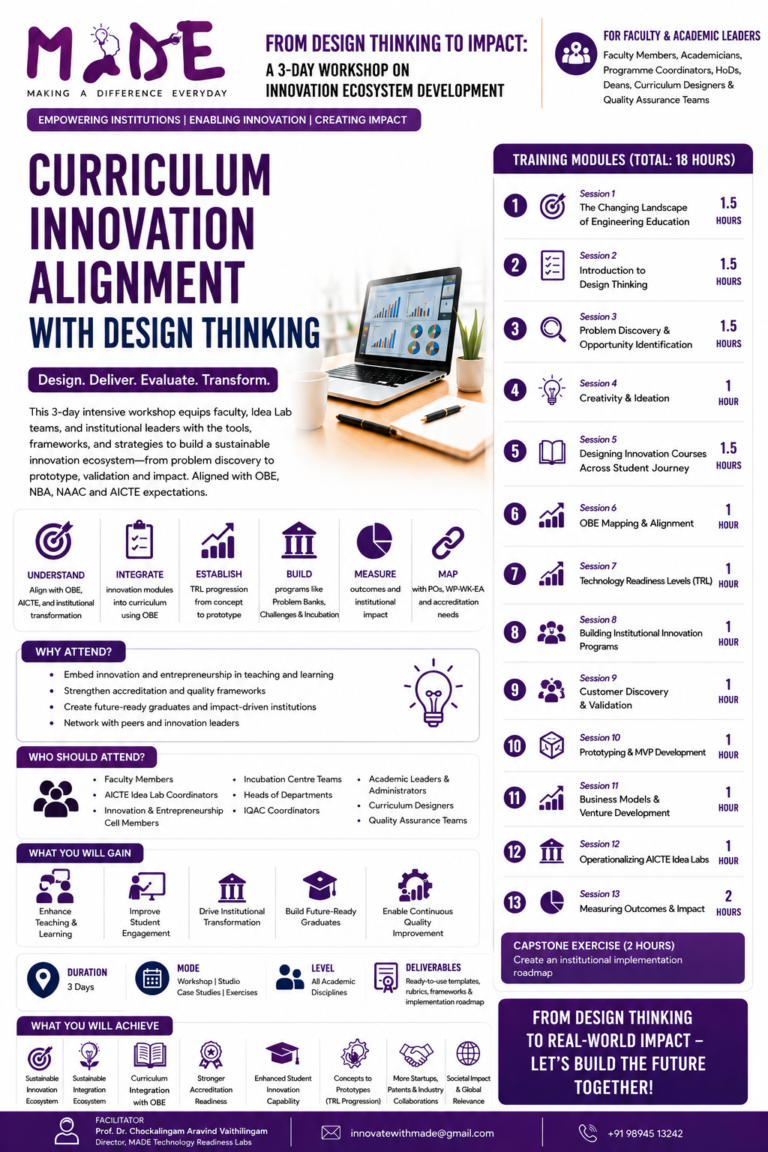
MADE 105 Curriculum Innovation Alignment with Design Thinking
MADE 104 Accelerating Innovation through Design Thinking
Innovation Mindset
Contextual Problem Discovery
Problem Framing
Opportunity Identification
Ideation, problem-solution fit
Prototyping MVP Design
Readiness Levels
Validation & Testing
Business Innovation Strategy
Go to Market
Impact Measurement & Sustainability
MADE 105 Curriculum Innovation Alignment with Design Thinking
Design Thinking and alignment with PO
Curriculum Integration & OBE Mapping
WK-WP-EA measurements and Impact Index
Tangible Outcomes and Byproducts in the accelerator framework
Readiness Levels and its importance in up scaling
Innovation Transition through Technology Readiness Level
Products, Execution, IP with Commercial Values
Impact Assessment through Readiness Level Matrix
MADE Engagements
Handson Workshops
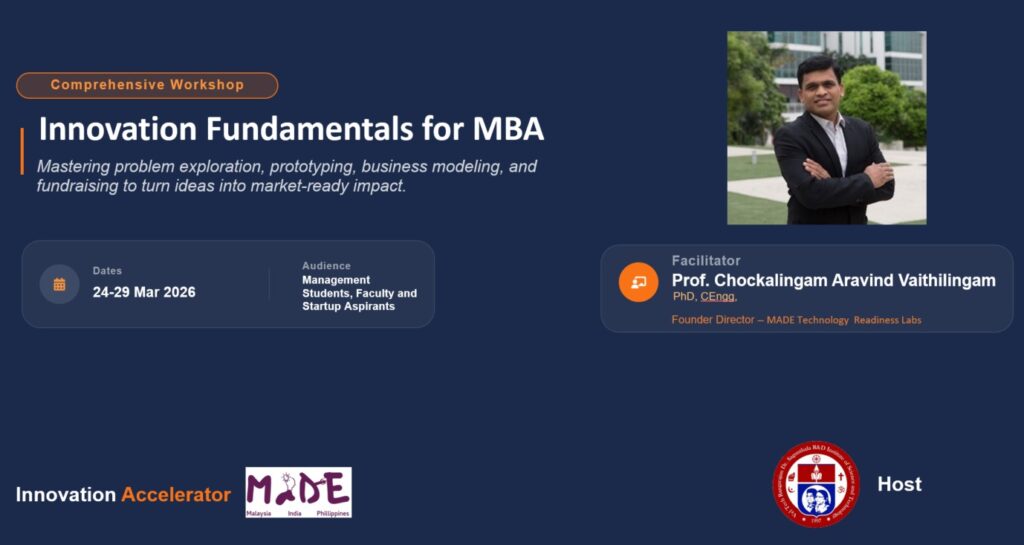
Innovation Fundamentals for MBA 24-29 March2026
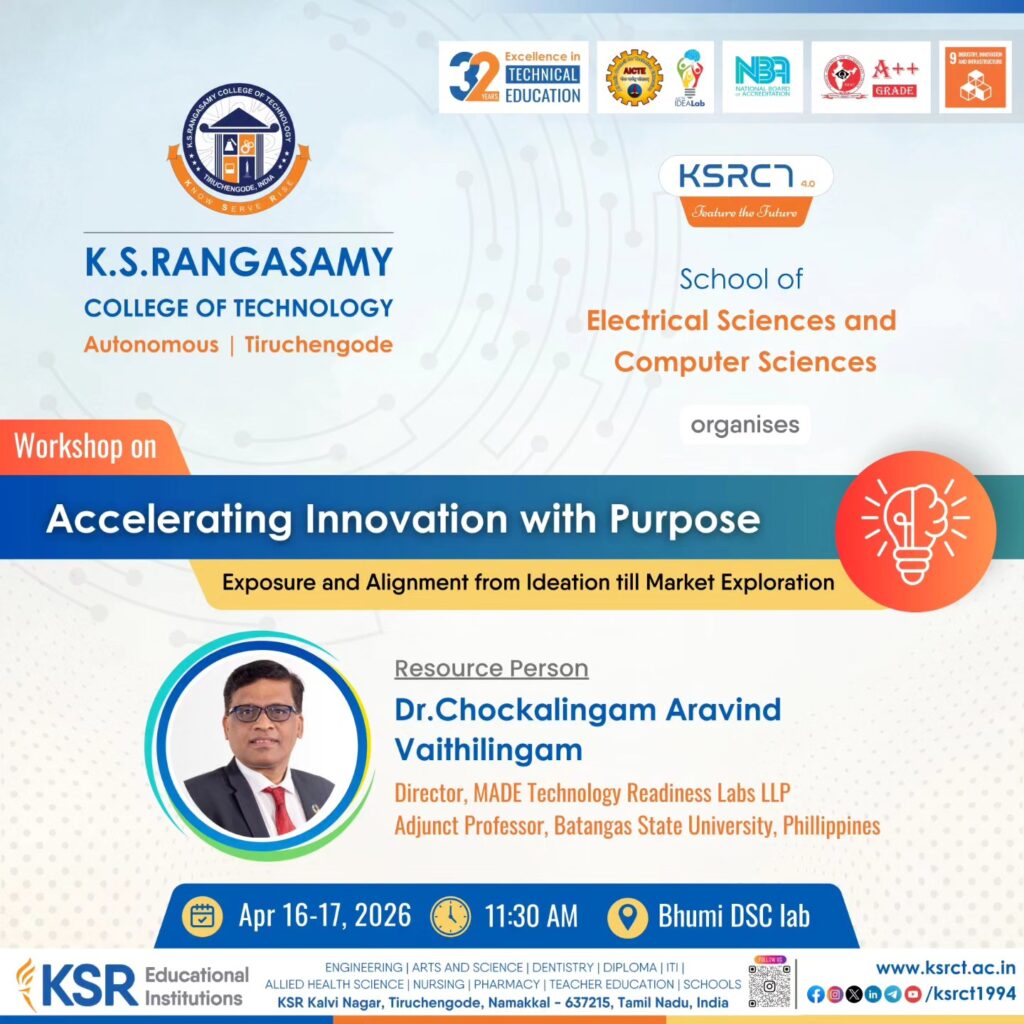
Accelerating Innovation with Purpose 16-17 April2026
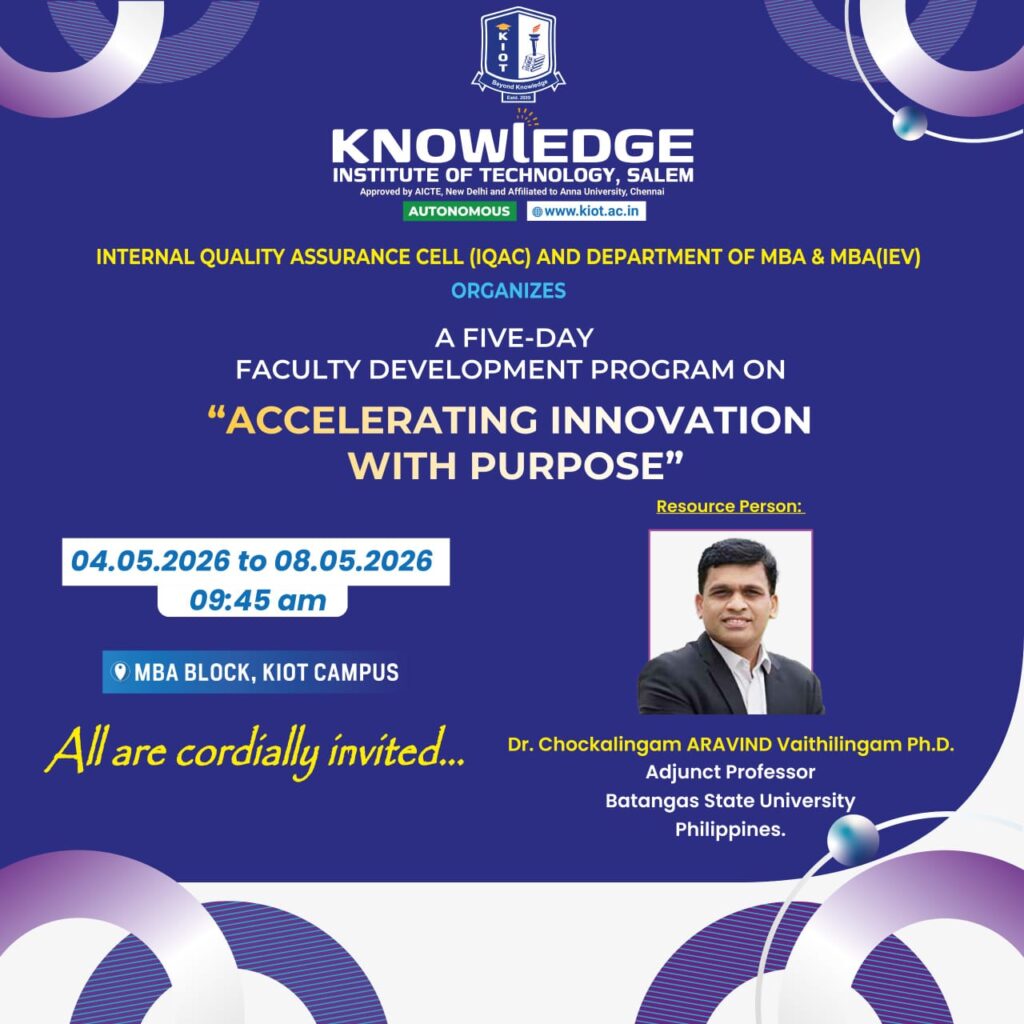
Accelerating Innovation with Purpose 4-8 May2026
Professional Engagements
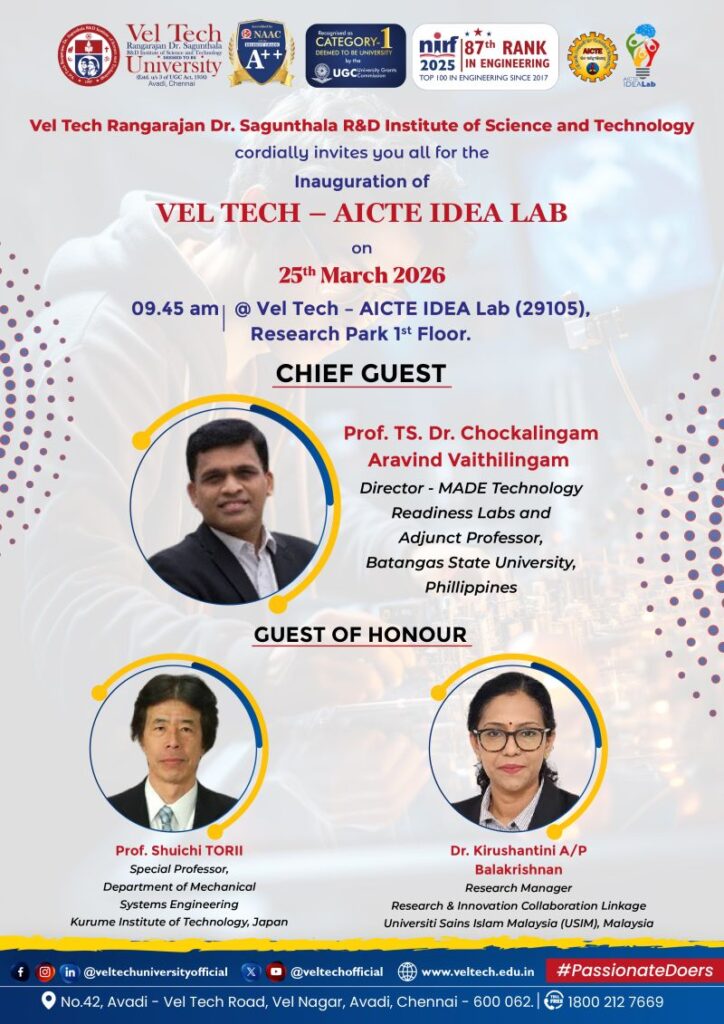
Cief Guest - Launch of AICTE IDEA Lab VELTECH University 25 March 2026
Keynote - From Equations to Intelligence: Mathematical Foundations Driving Real World AI Systems 16 April2026
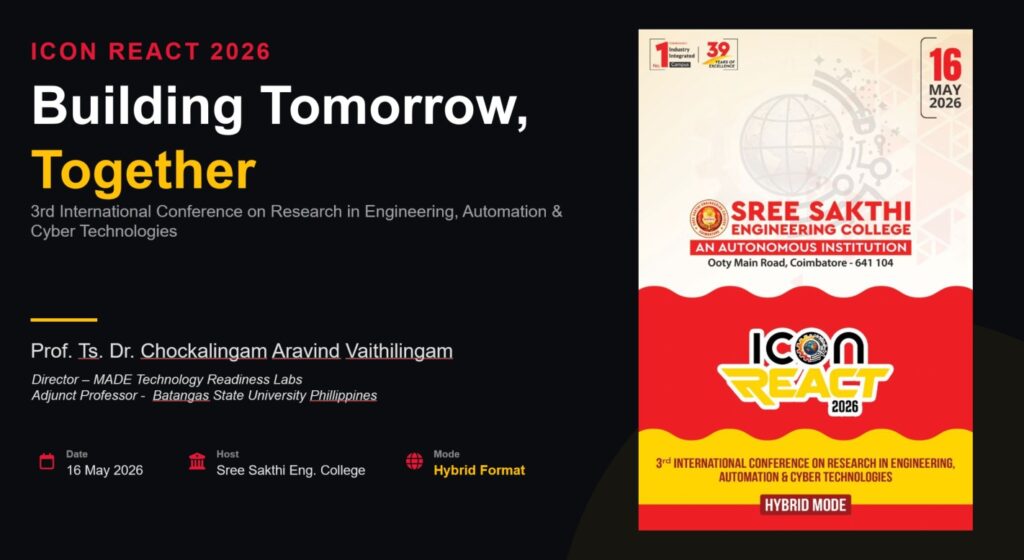
Keynote - Building Tomorrow, Together ICON REACT 2026 Sree Sakthi Engineering College Coimbatore 16 May2026
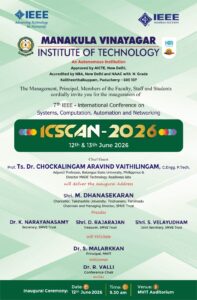
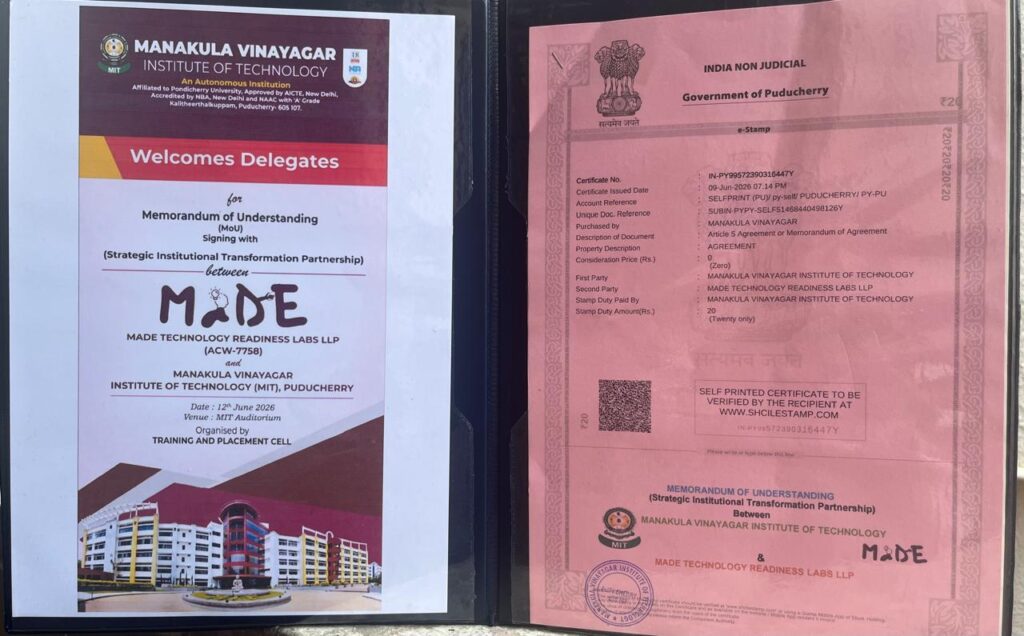
Chief Guest- From Scientific Discovery to Societal Impact: Engineering the Next Decade of Innovation, Sri Manakula Vinayagar College, Puducherry 12 June 2026